
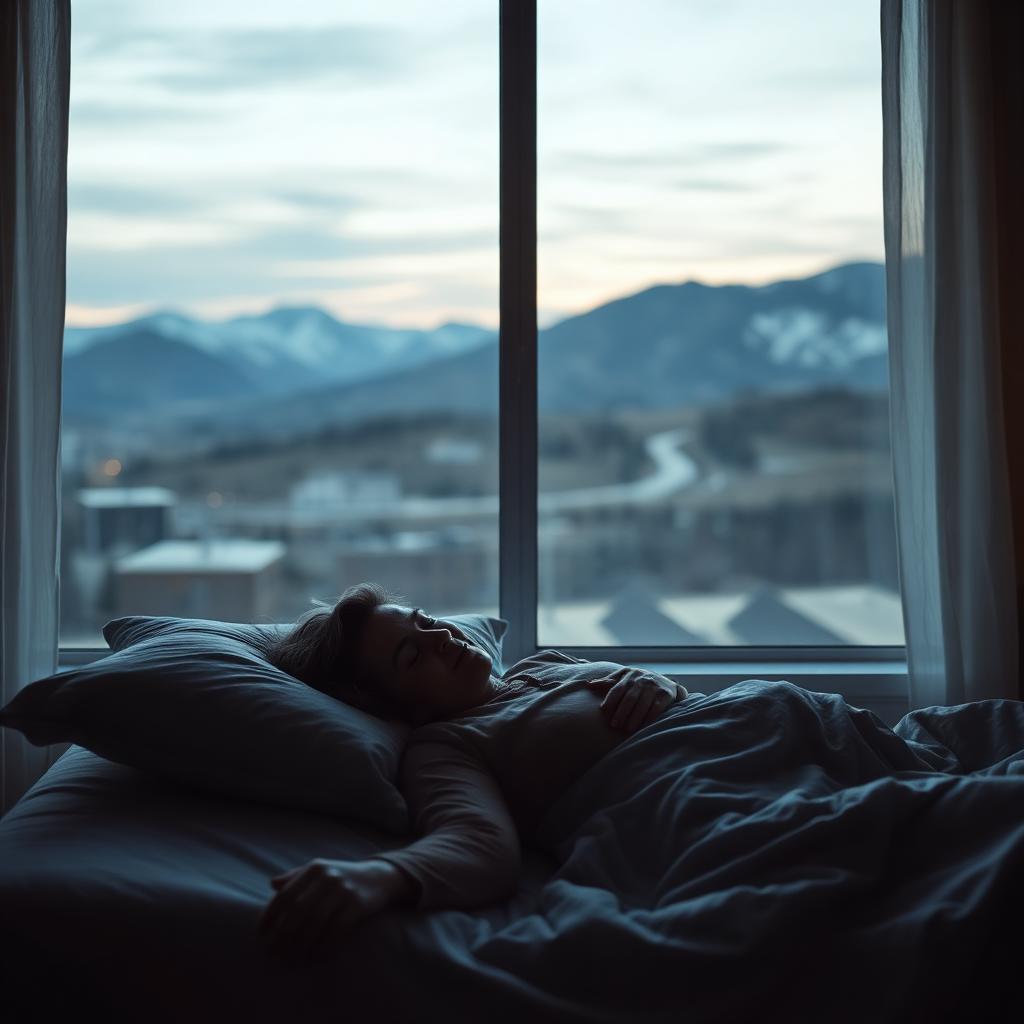
Why Sleep Apnea Hides in Women
Sleep apnea has a reputation problem. The classic picture, loud snoring, a partner noticing pauses in breathing, falling asleep at the wheel, comes almost entirely from research done on men. Women often present differently: daytime fatigue, insomnia, low mood, anxiety, brain fog, and sleep that never feels restorative, regardless of how many hours they got. Because those symptoms overlap so heavily with perimenopause itself, with stress, and with mood disorders, sleep apnea in women gets attributed to everything except sleep apnea.
The scale of the resulting underdiagnosis is striking. A foundational study estimated that 93 percent of women with moderate to severe sleep apnea had never been clinically diagnosed, compared with 82 percent of men, itself already a high number.1 More recent research still finds women are diagnosed at roughly half the rate of men despite comparable symptom burden. If a symptom checklist built around men is the only thing screening for it, a lot of women are going to fall through.
The Menopause Connection
The menopause transition is an independent risk factor for sleep apnea, separate from age or weight gain. A landmark study in the American Journal of Respiratory and Critical Care Medicine found that postmenopausal women not using hormone therapy were over four times as likely to have moderate to severe sleep-disordered breathing as premenopausal women, even after adjusting for age, BMI, and neck circumference.2 A separate study found the overall prevalence of sleep apnea was more than double in postmenopausal versus premenopausal women, 47 percent compared with 21 percent, with a significantly higher average severity score that held up even after controlling for weight.3
The leading explanation is hormonal, not just the weight changes that often accompany midlife. Estrogen and progesterone appear to help maintain upper airway muscle tone and support the drive to breathe steadily through the night. As levels decline, the airway becomes more prone to narrowing or collapsing during sleep, and body fat tends to redistribute toward the neck and trunk, compounding the effect. This mechanism has support from the other direction too: a Sleep Heart Health Study analysis of nearly 2,900 women found that those using hormone therapy had roughly half the prevalence of sleep-disordered breathing as those who weren't, after adjustment.4 That finding is about the biology, not a recommendation to start hormone therapy specifically to treat sleep apnea, but it reinforces that what's changing here is physiological, not just a byproduct of aging.
The Altitude Connection
Living and sleeping at higher elevation can independently alter breathing patterns during sleep, an effect that's well established in high-altitude physiology research.5 Lower atmospheric oxygen increases the sensitivity of the body's chemoreceptors, the sensors that regulate breathing based on blood oxygen and carbon dioxide levels, which promotes central apneas and unstable, periodic breathing during sleep. This isn't limited to expedition-level mountaineering conditions. It's measurable at the moderate elevations much of Colorado sits at.
A study conducted specifically in Colorado compared sleep study results across three elevations, roughly 4,700, 5,900, and 7,100 feet, all well within range of the Front Range through the mountain towns. Central apnea events, and the difficulty of achieving a good CPAP titration, increased significantly at each step up in elevation.6 In other words, this isn't a theoretical concern for people who summit peaks. It's relevant to anyone sleeping at a normal Colorado address.
Why the Combination Matters More Than Either Alone
Menopause and altitude affect sleep-disordered breathing through different mechanisms, one hormonal and structural, one related to oxygen availability and breathing drive, but they compound rather than cancel out. A woman going through perimenopause or menopause while living at elevation is carrying two separate, evidence-based reasons her risk of sleep apnea is elevated, on top of whatever baseline risk she'd have from age, weight, or family history alone.
None of this means every woman with disrupted sleep at midlife has sleep apnea. Most don't. It means sleep apnea deserves to be actually ruled out, rather than assumed away, before disrupted sleep gets filed under "just menopause" or "just insomnia" and treated as either one by default.
What to Watch For
Because the classic male presentation doesn't reliably show up in women, it's worth screening based on the fuller symptom picture:
Morning headaches, waking unrefreshed no matter how long you slept, daytime fatigue that feels disproportionate to your time in bed, new or worsening brain fog, mood changes or anxiety that track with poor sleep, snoring that's new or has gotten louder, and, if you have a partner who can observe it, witnessed pauses in breathing or gasping during sleep.
None of these on their own confirms sleep apnea. Together, especially layered on top of menopause, elevation, or both, they're a reasonable trigger to get tested rather than to keep troubleshooting sleep hygiene indefinitely.
Getting Tested Without the Hassle
The standard path to a sleep apnea diagnosis, a referral, prior authorization, and an overnight stay in a sleep lab, is slow and, for a lot of Colorado patients, involves a long drive to the nearest in-network facility. WatchPAT is an FDA-cleared, at-home alternative: three small sensors, one night in your own bed, and a report scored and interpreted by a board-certified sleep physician. No referral or prior authorization required, and results typically come back within about a week rather than the weeks-to-months wait that's common with lab-based studies.
What Treatment Actually Looks Like
A sleep apnea diagnosis isn't automatically a lifetime CPAP sentence, and treatment isn't one-size-fits-all. What's right depends on severity, anatomy, and what a person can realistically stick with long term.
CPAP (continuous positive airway pressure) remains the gold standard, especially for moderate to severe OSA. A small machine delivers steady air pressure through a mask to keep the airway open through the night. It's highly effective when used consistently, and modern machines are quieter and smaller than the versions most people picture.
Oral appliances are a reasonable alternative for mild to moderate OSA, or for people who can't tolerate CPAP. A custom-fitted device, similar to a mouthguard, holds the jaw slightly forward to keep the airway from collapsing.
Positional therapy helps a specific subset of patients whose apnea is meaningfully worse sleeping on their back. Devices or simple positional training that discourage back-sleeping can meaningfully reduce events for this group.
Addressing contributing factors matters alongside device-based treatment: weight changes, alcohol timing, and, for the menopause connection described above, a conversation with your prescriber about whether hormone therapy is otherwise appropriate for you, since its benefit for sleep-disordered breathing specifically is a secondary effect, not a primary indication.
The right combination is individual, and severity on your WatchPAT report is what actually drives the recommendation, not a default assumption that everyone needs the same device. If apnea is identified, the next step is building that plan directly, whether that means a CPAP referral, an oral appliance discussion, or addressing contributing factors first.
If you're navigating perimenopause or menopause at elevation, and your sleep hasn't felt right for a while, that's two real, evidence-based reasons it's worth ruling sleep apnea in or out directly, rather than continuing to guess. Learn more about WatchPAT home sleep apnea testing and the Sleep Restore Program, or book a Discovery Call to talk through whether testing makes sense for you.
References
- Young, T., Evans, L., Finn, L., Palta, M. Estimation of the Clinically Diagnosed Proportion of Sleep Apnea Syndrome in Middle-Aged Men and Women. Sleep. 1997;20(9):705-706.
- Bixler, E.O., Vgontzas, A.N., Lin, H.M., Ten Have, T., Rein, J., Vela-Bueno, A., Kales, A. Prevalence of Sleep-Disordered Breathing in Women: Effects of Gender. American Journal of Respiratory and Critical Care Medicine. 2001;163(3):608-613.
- Dancey, D.R., Hanly, P.J., Soong, C., Lee, B., Hoffstein, V. Impact of Menopause on the Prevalence and Severity of Sleep Apnea. Chest. 2001;120(1):151-155.
- Shahar, E., Redline, S., Young, T., Boland, L.L., Baldwin, C.M., Nieto, F.J., O'Connor, G.T., Rapoport, D.M., Robbins, J.A. Hormone Replacement Therapy and Sleep-Disordered Breathing. American Journal of Respiratory and Critical Care Medicine. 2003;167(9):1186-1192.
- Rojas-Córdova, S., Torres-Fraga, M.G., Rodríguez-Reyes, Y.G., Guerrero-Zúñiga, S., Vázquez-García, J.C., Carrillo-Alduenda, J.L. Altitude and Breathing during Sleep in Healthy Persons and Sleep Disordered Patients: A Systematic Review. Sleep Science. 2023;16(1):117-126.
- Pagel, J.F., Kwiatkowski, C., Parnes, B. The Effects of Altitude Associated Central Apnea on the Diagnosis and Treatment of Obstructive Sleep Apnea: Comparative Data from Three Different Altitude Locations in the Mountain West. Journal of Clinical Sleep Medicine. 2011;7(6):610-615.
Written by Michelle Mullins, AGACNP-BC, FNP-BC
Last reviewed/updated: July 29, 2026